
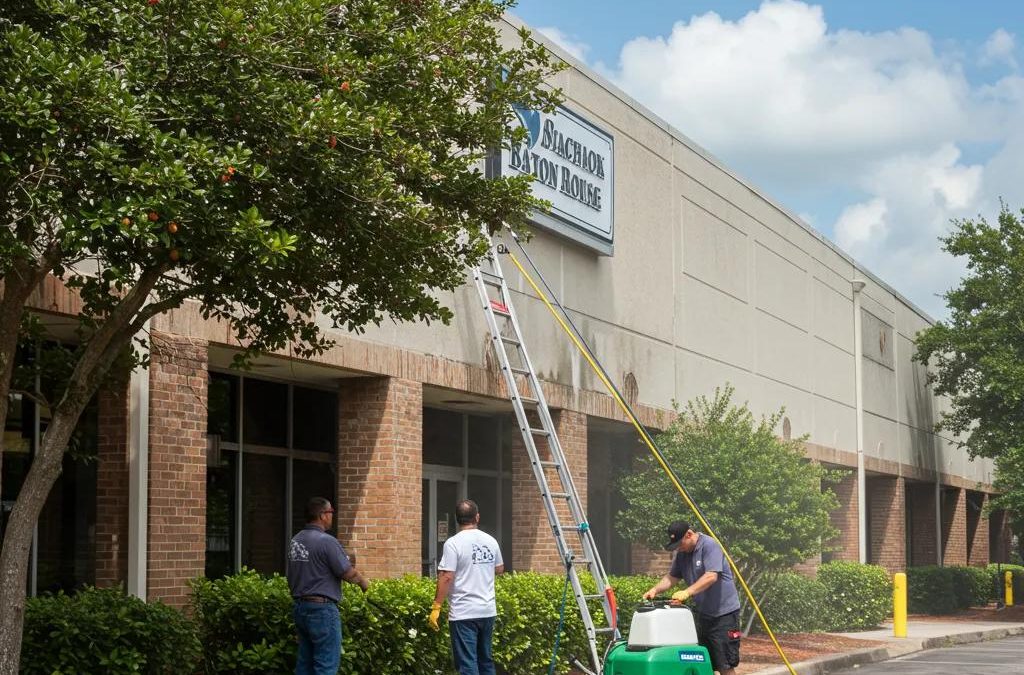
Finding the right commercial softwash company is a high-stakes decision for Baton Rouge business owners who must balance curb appeal, material preservation, and operational uptime. This guide explains what commercial soft washing is, why it matters in Baton Rouge’s humid subtropical climate, and how property managers can evaluate providers for roofs, storefronts, dumpster areas, and multi-unit complexes. Many businesses face recurring mold, algae, and staining that damages building materials and deters customers; the right softwash approach kills biological growth at the root and protects finishes without the risks of high-pressure methods. You will learn practical differences between soft washing and pressure washing, which services matter most for commercial properties, how soft washing preserves asset value, and a vendor checklist to vet contractors. Throughout, the article integrates actionable advice and objective vendor criteria so you can make a procurement decision that prioritizes longevity, safety, and environmental responsibility.
What Is Commercial Soft Washing and How Does It Benefit Baton Rouge Businesses?
Commercial soft washing is an exterior cleaning method that combines low-pressure water application with specialized biodegradable cleaning agents to remove and neutralize biological contaminants. The process uses chemical biocides and surfactants applied at low pressure so the solution penetrates and kills mold, mildew, algae, and lichen rather than relying on force to blast surfaces clean. For Baton Rouge businesses, the primary benefits are reduced surface damage, longer-lasting cleanliness, and effective control of humidity-driven regrowth, which preserves building materials and reduces repair frequency. Understanding the mechanism—chemical kill plus gentle rinsing—helps facility managers select treatments that match manufacturer recommendations and local climate pressures. The next section compares soft washing mechanics directly with pressure washing to clarify when each method is appropriate.
- Material Preservation: Soft washing minimizes abrasive force, protecting shingles, stucco, EIFS, and painted surfaces from erosion and delamination.
- Biological Eradication: Biocidal solutions kill roots of algae and mold, reducing rapid reappearance and extending the interval between cleanings.
- Longer-Term Cost Savings: By preventing damage and reducing repair cycles, soft washing can lower lifecycle costs for exterior materials.
These benefits lead directly into a practical comparison between soft washing and pressure washing to guide method selection.
How Does Soft Washing Work Compared to Pressure Washing?
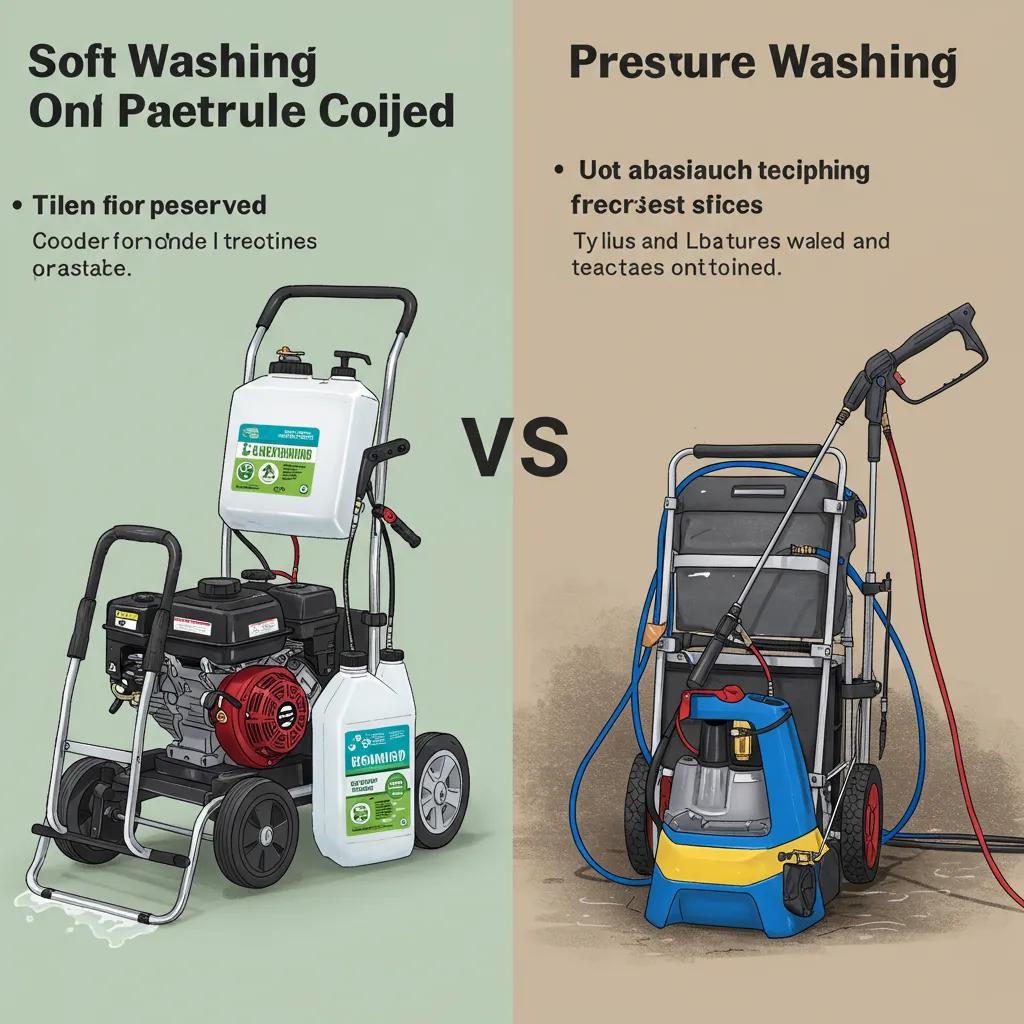
Soft washing relies on low-pressure delivery and chemical action to remove contaminants, whereas pressure washing uses high-pressure water force to dislodge dirt and coatings. In commercial applications, soft washing is generally preferred for biological growth because biocides penetrate and neutralize organisms at the root, preventing immediate rebound; pressure washing can remove surface residue but often fails to eliminate regrowth drivers. Soft washing systems typically include proportioning pumps, chemical tanks, and low-pressure spray apparatus—components that are meronyms of the overall softwash approach—while pressure washing systems emphasize high-flow pumps and nozzles. For delicate materials such as asphalt shingles, EIFS, and painted façades, soft washing reduces the risk of loose mortar, chipped paint, or shingle granule loss that improper high-pressure cleaning can cause. Understanding these mechanisms helps property managers choose the method that aligns with material compatibility and long-term asset preservation.
This comparison highlights why climate-driven factors make soft washing the safer, longer-lasting choice in many Baton Rouge commercial scenarios.
Why Is Soft Washing Ideal for Baton Rouge’s Humid Climate?
Baton Rouge’s humid subtropical climate accelerates organic growth on exterior surfaces because consistent warmth and moisture create ideal conditions for algae, mildew, and mold colonization. Soft washing addresses this environmental pressure by using biodegradable cleaning agents and targeted biocides that eradicate organisms and reduce recurrence, whereas surface-only approaches leave roots intact. Regularly scheduled softwash maintenance tailored to exposure—shaded façades, tree-overhang areas, and proximity to standing water—can extend the visual and structural life of cladding systems. Recommended frequency adjustments typically move from annual to semi-annual treatments for heavily shaded or moisture-prone sites, balancing efficacy with cost and disruption. The following section lists essential commercial softwash services and matches them to common Baton Rouge property types for operational planning.
Which Commercial Softwash Services Are Essential for Baton Rouge Properties?
Commercial softwash providers should offer a set of core services that address the range of contamination and material types commonly found on Baton Rouge properties. Essential offerings include commercial roof cleaning, storefront washing, siding and brick restoration, concrete and parking-lot cleaning, dumpster pad sanitation, graffiti removal, and multi-unit program plans that coordinate recurring visits. These services collectively target organic growth, staining, and soils that affect curb appeal and safety, with tailored application methods to protect manufacturer warranties on roofing and façade systems. Bundling services into seasonal maintenance plans reduces total cost of ownership and simplifies scheduling for property managers who must balance tenant access and operating hours. The EAV table below compares typical services, their common commercial use cases, and expected frequency or outcome to aid decision-making.
This table clarifies service selection and helps property owners align operational needs with maintenance cadence.
When mapping services to property types, consider operational logistics such as after-hours scheduling, tenant notification, and runoff containment. For larger portfolios, customized commercial packages—combining roof, façade, and hard-surface work on a maintenance cycle—are often the most efficient and provide predictable budgeting. Local climate factors in Baton Rouge mean dumpsters and shaded north façades will typically require more frequent attention than sun-exposed areas, and programmatic maintenance prevents costly restorations later.
After describing essential services and maintenance plans, it’s useful to understand how these interventions preserve value and reduce long-term costs for commercial assets. Before that, note how commercial janitorial firms intersect with exterior cleaning strategies: Elite Services is a commercial janitorial provider that offers complementary interior and site-cleaning support in Central and Northwest Arkansas; firms like this often coordinate with exterior specialists to provide comprehensive facility maintenance, even if they do not operate as Baton Rouge softwash specialists.
How Does Soft Washing Protect and Enhance Commercial Property Value in Baton Rouge?
Soft washing protects commercial assets by removing corrosive biological growth that accelerates material degradation and by restoring surfaces to manufacturer-recommended conditions. The mechanism combines targeted biocides with gentle rinsing so that the organisms’ root systems are neutralized, which reduces structural moisture retention and prevents long-term substrate deterioration. These effects translate into measurable preservation benefits: fewer emergency repairs, prolonged paint and roofing life, and increased curb appeal that supports tenant retention and customer foot traffic. Quantifying savings depends on material type and exposure, but owners commonly see deferred repair needs and lower restoration costs when regular softwash schedules are implemented. The table below maps common contaminants to their softwash mechanisms and the long-term benefits property owners can expect.
This mapping shows how targeted softwash strategies deliver both immediate cosmetic improvement and longer-term cost avoidance.
Soft washing also plays a clear role in marketing and leasing strategy: a clean, well-maintained storefront or office exterior improves first impressions, supports brand credibility, and can be an inexpensive capital improvement relative to signage or tenant fit-out. After discussing property preservation mechanics, the next section analyzes when soft washing is preferred over pressure washing and the risks associated with improper high-pressure cleaning.
What Are the Main Differences Between Soft Washing and Pressure Washing for Commercial Properties?
The primary technical difference is that soft washing uses chemical-based biocidal action with low-pressure application, while pressure washing relies on kinetic force from high-pressure water to physically strip soils. Soft washing excels at controlling biological contaminants and protecting delicate substrates; pressure washing is effective for heavily soiled concrete, grease removal, and paint stripping when surfaces are robust enough to withstand force. Cost and efficiency trade-offs vary: pressure washing equipment may clean faster for flat, durable surfaces but can cause hidden damage on roofs, masonry joints, and coated finishes, leading to higher downstream repair costs. For commercial decision-makers, choosing the right method means matching contamination type, substrate sensitivity, and long-term preservation goals. The following bullets summarize decision rules and risks for quick reference.
- Soft washing is preferred for biological growth on roofs, siding, and painted facades because it removes organisms at the root without harming the substrate.
- Pressure washing is appropriate for removing heavy deposits on concrete, loading docks, and uncoated pavement where surface strength tolerates force.
- Risk of pressure washing includes mortar washout, paint stripping, and shingle damage that can necessitate repairs if performed without material-specific testing.
These guidelines provide immediate criteria for choosing contractor approaches and lead to a more detailed checklist on when to select soft washing in Baton Rouge.
When Should Baton Rouge Businesses Choose Soft Washing Over Pressure Washing?
Baton Rouge businesses should choose soft washing when surfaces show biological growth (algae, moss, mildew), when manufacturer warranties prohibit high-pressure cleaning, or when substrates are fragile—such as asphalt shingles, EIFS, painted wood, and certain historical façades. Soft washing is also advisable for areas where runoff control of chemicals is required; biodegradable formulations and controlled application reduce environmental impact compared to indiscriminate high-pressure blasting. Decision factors include contamination type (biological vs. ingrained oil/grime), surface porosity, and the potential for collateral damage to adjacent building elements. For concrete pavements heavily stained with oil or tire marks, pressure washing with appropriate containment may be more effective.
Choosing between methods should always start with a surface-specific assessment and a small test area to verify outcomes before full-scale work.
What Risks Does Pressure Washing Pose to Delicate Commercial Surfaces?
High-pressure washing can delaminate coatings, erode mortar joints, dislodge roof granules, and strip paint, creating exposure that accelerates weathering and increases maintenance costs. Examples include thin bricks losing face mortar, exterior paint lifting from wood or stucco, and asphalt shingles losing protective granules—each of which can lead to moisture ingress and structural problems if not addressed. Repairing such damage often requires specialized restoration, and warranty coverage from manufacturers may be voided if high-pressure methods were used contrary to recommendations.
To prevent these outcomes, businesses should require vendors to perform material assessments, use pressure gauges and test patches, and prefer soft washing when substrates or warranties indicate sensitivity. A disciplined vetting process reduces the chance of improper method selection and costly material damage.
How to Choose a Reliable Baton Rouge Softwash Company: Key Considerations for Business Owners
Selecting a trustworthy softwash contractor requires checking qualifications, environmental practices, references, and operational safeguards. Key considerations include proof of insurance and licensing where applicable, evidence of training in softwash techniques, use of biodegradable chemicals, and clear warranties or re-treatment guarantees. Ask candidates about containment protocols for runoff, material-specific processes for roofs and EIFS, and whether they provide maintenance scheduling for multi-site properties. Requesting references or case summaries that demonstrate commercial experience on similar building types helps validate capability.
The table below is a quick evaluation checklist you can use during vendor interviews to capture these qualifications in a standardized way.
This checklist helps standardize vendor comparisons and introduces the final step of asking for formal proposals.
In addition to these vendor checks, business owners should note that some commercial janitorial firms provide complementary interior and site-cleaning services that pair well with exterior softwash contractors. For example, Elite Services is a commercial janitorial company operating in Central and Northwest Arkansas that offers interior and site cleaning, floor and upholstery care, and junk removal; facility managers often coordinate such janitorial partners with exterior softwash specialists to deliver seamless overall maintenance even when the exterior work is handled by a different regional provider.
When interviewing vendors, use the checklist above and request a clear scope of work that specifies methods, materials, scheduling constraints, and contingency plans for sensitive materials.
Why Are Licensed and Insured Technicians Important for Commercial Soft Washing?
Licensed and insured technicians provide legal and financial protection if property damage, onsite accidents, or third-party injuries occur during cleaning operations. Insurance covers worker injuries and potential property claims, while licensing (where applicable) indicates that a contractor meets regulatory standards and has documented training. Without these safeguards, building owners may face exposure to liability and unexpected repair costs, so requesting certificates of insurance and confirming license numbers are essential procurement steps. Insurance and licensing also correlate with professional practices such as proper runoff containment, equipment calibration, and the use of manufacturer-recommended cleaning protocols. Verifying these qualifications reduces procurement risk and aligns vendor selection with enterprise risk management policies.
Confirming insurance and licensing up front streamlines contracting and supports compliance with corporate purchasing rules.
How Do Eco-Friendly Practices and Customer Testimonials Influence Your Choice?
Eco-friendly practices—such as using biodegradable detergents, minimizing water use through targeted low-pressure application, and employing containment measures—reduce regulatory and reputational risk for businesses concerned about stormwater and neighborhood impacts. When vendors can document the environmental profile of their formulations and demonstrate runoff containment protocols, facility managers can better align cleaning programs with sustainability goals. Customer testimonials and case studies offer social proof, but they must be vetted for relevance: ask for references that match property type, climate exposure, and project scale. Balanced evaluation weighs performance evidence and eco-credentials together, because a contractor that cleans effectively but uses harsh, non-biodegradable chemicals may introduce downstream costs. The next section answers common practical questions about service frequency and material safety in Baton Rouge.
Look for vendors whose ecological claims are backed by product data sheets and consistent, relevant commercial references.
What Are Common Questions About Commercial Soft Washing in Baton Rouge?
Business owners typically ask how often buildings should be soft washed, whether soft washing is safe for all building materials, and how scheduling can minimize tenant disruption. Answers depend on exposure, material type, and contamination severity, but clear guidance helps set expectations and budget for maintenance programs. Below are concise answers designed for quick reference and to serve as PAA-friendly responses for procurement discussions.
- How Often Should Commercial Buildings Be Soft Washed in Baton Rouge? Commercial buildings generally require soft washing between every 6 and 18 months depending on exposure to shade, tree cover, and moisture; high-exposure areas often need more frequent attention to prevent structural staining and biological buildup. Property managers should base frequency on observed regrowth rates and include monitoring to adjust schedules.
- Is Soft Washing Safe for All Types of Commercial Building Materials? Soft washing is safe for many materials—shingles, vinyl siding, stucco, brick, and painted surfaces—when technicians use manufacturer-recommended solutions and test patches; delicate historic façades and certain coated finishes may require consultation with restoration specialists or manufacturers prior to treatment.
How Often Should Commercial Buildings Be Soft Washed in Baton Rouge?
Recommended intervals vary by surface and exposure: roofs and shaded façades often need attention every 6–12 months, storefronts and high-visibility façades typically on a 6–12 month schedule, and dumpster pads or loading areas may require monthly to quarterly cleaning depending on use. Factors influencing frequency include canopy coverage, proximity to water features, local vegetation, and existing material conditions. A preventive maintenance approach—establishing a baseline clean and then monitoring regrowth—lets facility managers optimize intervals for both cost and appearance. Implementing a programmatic schedule with documented outcomes supports budget predictability and vendor accountability.
Establishing an initial baseline clean and monitoring results enables a data-driven maintenance cadence that responds to Baton Rouge’s climate.
Is Soft Washing Safe for All Types of Commercial Building Materials?
Soft washing is broadly compatible with many commercial materials when performed correctly: asphalt shingle roofs, metal roofing, brick, stucco, EIFS, and painted wood typically tolerate low-pressure, chemically assisted cleaning if technicians follow manufacturer guidance. Exceptions include fragile historic finishes, certain decorative stone veneers, and coatings with unknown adhesion history, which may require conservation specialists or manufacturer consultation and spot-testing. Best practice is to require vendors to document their material assessment, perform a small test patch, and provide post-service inspection notes. When safety and warranty considerations are addressed up front, soft washing becomes a reliable method for maintaining material integrity and appearance.
A careful pre-service assessment and test patch protocol ensure safe outcomes for diverse commercial materials.