
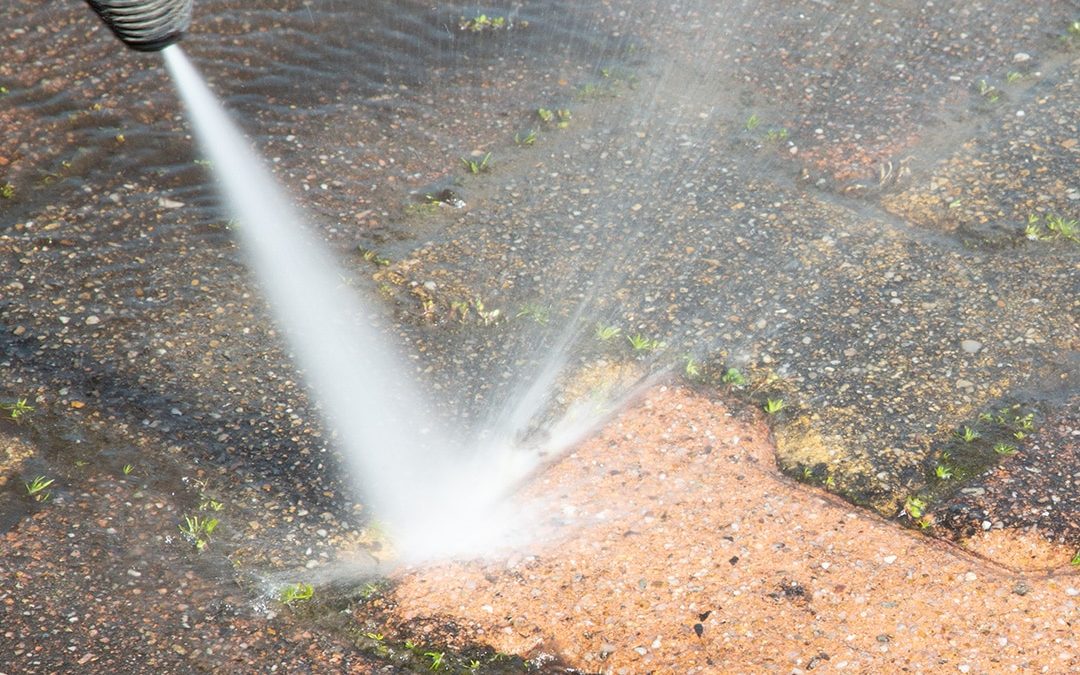
We now offer pressure washing, also called power washing, across Baton Rouge and the surrounding parishes. After years of soft washing roofs, siding and wood, we have added a second system for the surfaces that high pressure actually suits — concrete, brick, pavers and commercial flatwork. This post explains exactly what power washing is best for, and just as importantly, what it should never touch.
Power Washing and Soft Washing Are Not Competing Methods
They are different tools for different materials, and most of the damage people associate with pressure washing comes from using the wrong one.
Power washing uses high pressure — typically 2,000 to 4,000 PSI — to physically strip embedded dirt, oil and organic staining off dense, non-porous surfaces. Soft washing runs at roughly garden-hose pressure, around 150 to 300 PSI, and does the work with a biodegradable cleaning solution instead of force.
On a concrete driveway, high pressure is the faster and more thorough choice. On an asphalt shingle roof, it strips the protective granules and voids your manufacturer warranty. Same crew, same truck, entirely different approach depending on what we are standing in front of.
Surfaces Power Washing Is Best For
These materials are dense enough to take high pressure without absorbing water or losing their finish.
Concrete Driveways and Slabs
The most common request, and the surface where the difference is most visible. Oil spots, tire marks, rust bleed from irrigation heads, and the greenish-black film that Louisiana humidity bakes into the pores of the concrete all respond to pressure plus pre-treatment.
Sidewalks and Walkways
A shaded walkway that has gone dark is not simply dirty — it is biological growth, and it gets genuinely slick when wet. Cleaning it is as much a safety job as a cosmetic one.
Patios and Pool Decks
Stamped concrete, exposed aggregate and pool surrounds clean up well when the pressure is matched to the surface and the finish is kept even.
Brick and Paver Hardscape
Brick and pavers take pressure well, but joint sand does not. We dial pressure back and adjust the angle so growth lifts out of the joints without blowing the sand out with it.
Parking Lots, Garages and Entry Aprons
Commercial flatwork picks up oil, grease and heavy foot traffic. We schedule this outside business hours, one-time or recurring.
Dumpster Pads and Drive-Thru Lanes
Restaurant service areas need degreasing, not just rinsing. Heated water makes a real difference on baked-on grease, which is the one case where the distinction between “power” and “pressure” washing genuinely matters.
Surfaces That Should Never Be Power Washed
We will turn these down as a power wash and quote them as a soft wash instead. This is not us being precious — it is the difference between cleaning a surface and damaging it.
- Asphalt shingle and tile roofs. High pressure strips the granules that protect the shingle and shortens the life of the roof. See our roof soft washing service.
- Vinyl, stucco and painted siding. Pressure forces water behind the cladding, where it has no way to dry.
- Window screens, soffits and vents. Easily deformed, and expensive to replace.
- Wood decks and stained fencing. High pressure erodes the grain and leaves a furred, uneven surface. Wood gets low pressure and a cleaning solution.
- Anything under an active manufacturer warranty. Many warranties are explicit that high-pressure cleaning voids coverage.
If your project is a mix — and most whole-property jobs are — we use both systems on the same visit. Roof and siding get soft washed; the driveway, walkway and patio get power washed.
Why Baton Rouge Concrete Gets Dirty Faster Than Most
Southern Louisiana is close to a worst-case environment for exterior concrete. Humidity sits above 70% for most of the year, summer storms keep surfaces damp, and anything shaded by live oaks stays wet for days at a time. That lets algae, mildew and lichen colonise the pores of a slab continuously rather than seasonally.
On top of the biological growth, our iron-rich soil leaves rust bleeding at slab edges, spring brings heavy oak pollen, and any parked-on surface collects oil and transmission drips. Each of those responds to a different treatment, which is why a proper power washing job is pre-treatment plus pressure — never pressure alone.
How We Actually Clean It
1. Identify the surface
We check the material and its condition first, then set pressure and nozzle accordingly. If something should be soft washed instead, we say so before we start.
2. Protect and pre-treat
Landscaping, fixtures and adjacent siding get covered. Heavy organic staining is pre-treated so the chemistry does the work and the pressure does less of it.
3. Clean with a surface cleaner
Flatwork is cleaned with a rotary surface cleaner rather than a hand-held wand. That is what produces an even finish instead of the zebra striping you get from a wand held at the wrong angle or distance.
4. Rinse and walk it with you
We rinse the work area and surrounding surfaces, then walk the finished job with you before we load up.
How Often Should You Have It Done?
Most Baton Rouge properties do well on an annual cleaning. Two situations call for more:
- Every six to nine months for heavily shaded driveways and north-facing walkways, where growth returns faster because the surface never fully dries.
- Quarterly or monthly for commercial flatwork, dumpster pads and drive-thru lanes carrying constant traffic.
Common Questions
Is power washing the same as pressure washing?
In everyday use, yes, and we use the terms interchangeably. Strictly speaking a power washer heats the water and a pressure washer does not. Heat matters on grease and oil, so it is relevant on restaurant pads and garage floors more than on a residential driveway.
Will it damage my concrete?
Not when pressure is matched to the surface. Damage comes from a zero-degree tip, holding the wand too close, or using high pressure on a material that needed soft washing. Sound concrete handles it well; aging or spalling concrete gets dialled back.
Do I need to be home?
No. For exterior flatwork we only need access to the area and an outdoor spigot. We confirm scope beforehand and walk the finished work with you if you are around.
Do you offer both services on one visit?
Yes, and it is usually the most economical way to do it. One mobilisation, both systems, the right method on every surface.
Frequently Asked Questions About Professional Power Washing
Every quote is based on what we can see on site: square footage, surface material, how much staining has built up, and water access. We measure and price in person, so the number you get is the number you pay.
Serving Baton Rouge, Lafayette, Zachary, Denham Springs, Gonzales and Prairieville. Learn more about our power washing services, or request a free quote and we will tell you plainly which method your property needs.