Secure, NAID‑Certified Document Shredding Near You — Compliant, Transparent, and Environmentally Responsible

Professional document shredding permanently destroys sensitive records so businesses meet legal requirements and sharply reduce data‑breach risk. This guide walks through how secure information destruction works, why NAID AAA certification and HIPAA/FACTA alignment matter, and how to choose between on‑site and off‑site services to protect customers, employees, and your reputation. You’ll see the practical differences between scheduled service and one‑time purge events, learn the right approaches for hard drives and electronic media, and understand the paperwork—chain‑of‑custody logs and certificates—that proves compliance. We also cover local considerations for Little Rock and nearby communities plus a simple checklist to verify NAID AAA and HIPAA‑compliant handling. Read on to compare service types, protect medical and financial records, evaluate media destruction methods, and find a provider that meets your security and sustainability goals.

What Are Business Document Shredding Services and Why Are They Essential?

Business document shredding services provide secure, auditable destruction of paper records using industrial‑grade equipment and controlled handling to make information unreadable and unrecoverable. Providers combine secure collection (locked bins or sealed bags), logged transport, industrial cross‑cut shredding or pulping, and certificates of destruction so you can prove disposal. The main benefits are regulatory compliance, lower likelihood of a breach, and an auditable trail that protects customers, employees, and your organization’s legal standing. Knowing the service types—scheduled, one‑time purge, on‑site, and off‑site—helps you match service frequency, visibility, and logistics to your operational needs. We summarize those options below and then unpack each choice in the following sections.

Different service models suit different operational demands; the table below summarizes common options and ideal uses.

Service TypeFrequency / LocationBest Use Case
Scheduled shredding serviceRecurring pick‑ups; off‑site processing or on‑site mobile serviceSteady PHI/PII output from clinics, HR, or finance teams
One-time purge shreddingSingle bulk collection; available on‑site or off‑siteOffice cleanouts, mergers, or annual purges
Mobile/on-site shreddingShredder brought to your location; destruction witnessedHigh‑transparency needs or large immediate destruction events
Off-site industrial shreddingSecure transport to facility for batch processingOngoing, high‑volume needs where on‑site witnessing isn’t required

This comparison shows which approach minimizes transit risk or increases visibility, depending on your compliance priorities and workflow. The sections that follow explain how professional handling protects data and which document types require secure disposal.

How Does Professional Document Shredding Protect Your Business Data?

Professional shredding protects data through layered controls that begin at collection and end with certified destruction, producing a verifiable chain of custody that limits exposure. Secure collection uses locked bins and tamper‑evident containers; transport is logged and handled by trained staff; and industrial methods—cross‑cut or micro‑shredding—destroy paper fibers so reconstruction is essentially impossible. Each event is backed by a certificate of destruction that records date, volume, and method. Keeping these records supports regulatory defense and risk management. The same documentation standards apply to electronic media destruction, which we cover next.

Chain‑of‑custody records and certificates are often the deciding factor in vendor selection. Ask prospective providers how they verify each step before you schedule service.

What Types of Documents Should Businesses Shred for Compliance and Security?

Shred any records that contain personally identifiable information (PII), protected health information (PHI), financial account numbers, employee personal data, or sensitive legal documents. Common examples include medical records and billing statements (HIPAA), credit applications and bank statements (FACTA), payroll files and Social Security numbers, and attorney correspondence that contains client details. Proper shredding reduces identity‑theft risk and helps you meet disposal rules set by regulators while protecting your organization’s reputation during staff turnover or vendor changes. A clear document‑classification workflow that routes high‑risk materials into secure bins makes compliance consistent and lowers the chance of accidental disclosure.

Linking your destruction policy to retention schedules and shredding frequency simplifies the choice between scheduled service and one‑time purges—and prepares your organization for audits or investigations.

How to Find NAID AAA Certified Shredding Near Me for Maximum Security?

NAID AAA certification signals independent audits of a vendor’s security controls, employee screening, operational procedures, and facility protections. To find certified shredding locally, ask for proof of a current certificate, find out how often the provider is audited, and confirm which controls are covered by the assessment. These checks let you compare vendors objectively. Local factors—service coverage in Little Rock and across Arkansas, capacity for scheduled pickups, and availability of on‑site mobile shredding—should also guide your decision.

Use this short checklist to verify NAID AAA status and vendor readiness:

  • Request the current NAID AAA certificate and note the audit date.
  • Confirm documented chain‑of‑custody practices and the manifests or logs you’ll receive.
  • Verify insurance, employee background checks, and site‑access controls.
  • Ask for references or examples of work with similar regulated clients.

This checklist gives procurement teams a practical buying process that ties certification to everyday controls; the next subsection explains what NAID AAA audits and why those elements matter.

What Is NAID AAA Certification and Why Does It Matter for Document Shredding?

NAID AAA is an industry standard based on independent audits of a vendor’s security program. Auditors review operational policies, employee vetting, chain‑of‑custody procedures, facility security, and destruction methods. The certification matters because it reduces uncertainty about a supplier’s controls and gives auditors and compliance officers a recognized benchmark when evaluating destruction providers. NAID AAA audits test consistent application of policies, secure transport, recordkeeping, and personnel safeguards—controls that materially lower the risk of mishandling sensitive records. Many organizations that must meet HIPAA or FACTA requirements prefer NAID AAA partners because it streamlines due diligence and supports defensible disposal practices.

Knowing the certification scope helps you ask targeted questions about how a provider operates day‑to‑day and how audit findings are addressed.

How Does NAID AAA Certification Ensure a Secure Chain of Custody?

NAID AAA‑certified providers follow documented chain‑of‑custody steps—secure collection, locked containers, signed manifests, monitored transport, and certificate issuance—that create an unbroken record from pickup to destruction. Audits verify containers are secured, vehicles are monitored, and transfers are logged with responsible‑party signatures, reducing opportunities for diversion or error. Regular internal and external reviews test controls at key breakpoints—collection, transport, and processing—and commonly include CCTV, restricted access, and batch tracking. For buyers, manifests, destruction certificates, and audit reports are the primary evidence you’ll rely on to demonstrate proper disposal.

Requesting those records during procurement makes the custody process auditable and defensible, and it directly supports HIPAA and FACTA obligations.

What Does HIPAA Compliant Document Destruction Mean for Healthcare Businesses?

HIPAA‑compliant destruction renders protected health information (PHI) unreadable, irrecoverable, and documented so you can show adherence to administrative, physical, and technical safeguards. Practically, that means using destruction methods—cross‑cut shredding, pulping, or physical destruction for media—that prevent reconstruction, and recording each event with chain‑of‑custody logs and certificates. Compliance also requires retention policies, limited access, staff training, and vendor due diligence that includes proof of secure handling. Healthcare providers that align disposal practices with HIPAA guidance reduce the chance of reportable breaches and improve their regulatory posture.

Core controls typically include:

  • Destruction methods that render PHI unrecoverable, with the method documented.
  • Chain‑of‑custody records and a certificate of destruction for each disposal event.
  • Staff training to identify PHI and follow secure collection procedures.
  • Vendor audit records and security controls included in procurement files.

These controls both prevent unauthorized exposure and provide evidence of compliance during audits or investigations; the legal risks of failing to follow them are significant, as explained next.

How Does HIPAA Compliance Affect Medical Record Shredding Requirements?

HIPAA requires covered entities to use reasonable safeguards to prevent unauthorized access to PHI during disposal. That means medical records must be destroyed using techniques and documentation that demonstrate irreversibility and control—accepted methods include cross‑cut shredding, pulping, or certified third‑party destruction for paper, and certified physical destruction or verified crypto‑erase for electronic media. Each event should be supported by a certificate of destruction and chain‑of‑custody logs. Administrative controls—policies, training, and vendor due diligence—are also expected, so organizations should document retention schedules and destruction authorizations to support compliance. Following these steps reduces legal exposure and leaves a clear record for regulators.

Consistent routines across clinical and administrative areas strengthen organizational risk management.

What Are the Legal Risks of Non-Compliance in Document Destruction?

Improper disposal of sensitive documents exposes organizations to regulatory fines, breach notification duties, litigation, and reputational damage. Under HIPAA and consumer protection laws, enforcement can include corrective action plans and monetary penalties. The harm is straightforward: discarded PHI or PII can be accessed and used, triggering investigation costs, notification requirements, and potential class actions. Regulators evaluate both the incident and the entity’s prior controls—missing destruction policies or certificates of destruction worsen liability. Those costs—investigation, remediation, notifications, and fines—make investment in certified destruction and thorough documentation a cost‑effective risk reduction step.

Recognizing these risks helps explain why NAID AAA and HIPAA alignment are important to procurement and compliance teams.

What Are the Benefits of On-Site Paper Shredding for Businesses Near You?

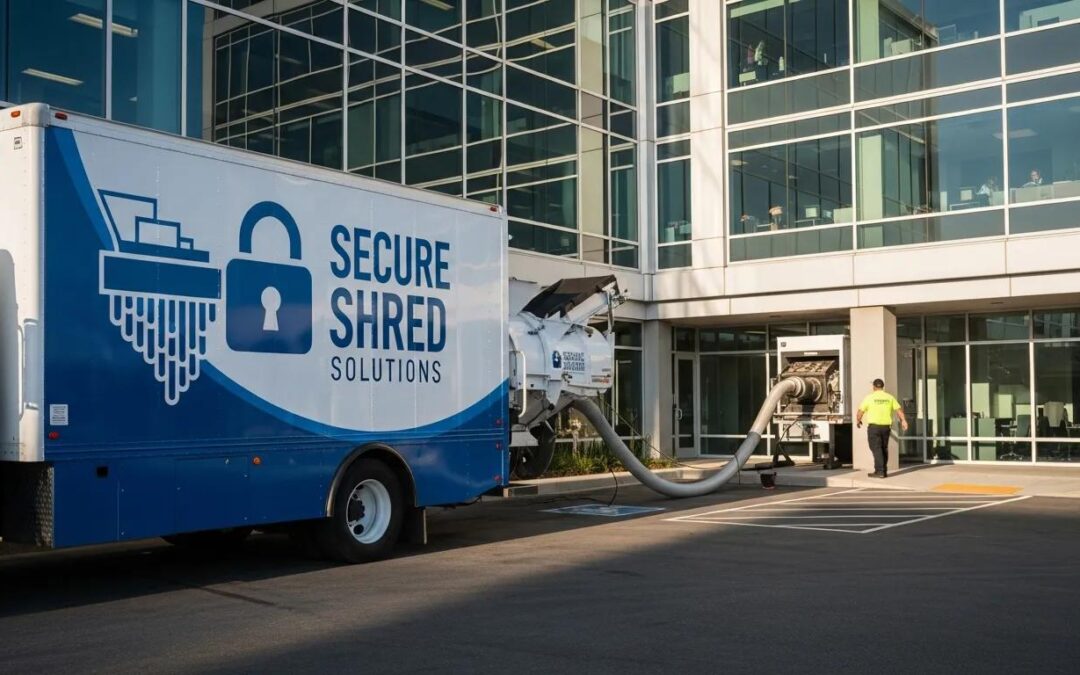
On‑site shredding brings the shredder to your location so documents are destroyed in view of staff. That increases transparency, removes the transit leg, and delivers immediate volume reduction. Witnessed destruction improves auditability—staff can see what happens to sensitive records and you receive instant verification. On‑site options are ideal for large purge events, sensitive client matters, or healthcare settings where visibility supports internal controls. Choosing on‑site versus off‑site is a balance between transparency and cost or scheduling constraints; the right choice depends on your priorities.

Primary advantages of on‑site shredding include:

  • Transparency and trust: Staff can witness destruction, increasing confidence in the process.
  • Reduced transit risk: Immediate destruction removes the need for secure transport.
  • Scalability for purges: Mobile trucks handle bulk events without disrupting operations.

At the end of this section: businesses in Little Rock and nearby areas that need scheduled or one‑time on‑site shredding should pick providers that offer witnessed mobile shredding and documented certificates—those features supply both transparency and compliance reassurance. Match the option to your retention policy and volume needs.

How Does On-Site Shredding Enhance Data Security and Transparency?

On‑site shredding strengthens security by eliminating a vulnerable transport step and by enabling staff to observe destruction, closing gaps where records might be diverted. Secure containers are moved directly to a mobile shred truck or on‑site unit, shredded by industrial equipment, and results are logged and certified on the spot. Video recording, signed manifests, and instant certificates further tighten the audit trail and give compliance teams tangible evidence to keep with retention and disposal records. These layered controls reduce both opportunity and uncertainty—critical for regulated industries and high‑sensitivity operations.

Visible destruction and immediate certification also simplify internal audits and reassure stakeholders that materials weren’t exposed during transport.

When Should Businesses Choose Scheduled vs. One-Time On-Site Shredding?

Choose scheduled on‑site shredding when you generate PHI or PII regularly—medical clinics, HR departments, and finance teams benefit from predictable intervals (weekly, monthly, quarterly) that prevent storage buildup and simplify compliance. Choose a one‑time purge for office cleanouts, mergers, or projects that require bulk destruction. Budget considerations matter: recurring service agreements smooth costs and scheduling, while one‑time purges solve episodic needs. Use volume, regulatory cadence, cost, and operational disruption as your decision criteria.

At the end of this section: if you need recurring or one‑time on‑site shredding in Little Rock, prioritize providers who document destruction events and recycle shredded material so you meet compliance and sustainability goals simultaneously.

How Do Secure Hard Drive Destruction Services Protect Your Electronic Data?

Secure hard drive destruction renders electronic storage devices unrecoverable using approved physical or logical methods and documents the process so you can prove drives are irretrievable and responsibly recycled. Options include physical shredding that fragments platters and circuit boards, degaussing to neutralize magnetic fields on HDDs, and verified crypto‑erase or secure wipe for certain SSDs when appropriate. Each method’s effectiveness depends on device type. Verification is provided through visual inspection, process logs, and certificates that list serial numbers and the method used—details that provide forensic defensibility. Matching the method to the device and regulatory need ensures destruction will withstand technical scrutiny and reduce breach risk.

The table below compares common device types, recommended methods, and expected verification outcomes.

Device TypeDestruction MethodVerification / Effectiveness
Hard Disk Drive (HDD)Degaussing or physical shreddingHigh forensic irrecoverability when properly applied
Solid State Drive (SSD)Physical destruction or verified crypto‑erasePhysical destruction preferred; overwrites may be insufficient
Mobile phones & tabletsDisassembly and physical crushing/shreddingVisual confirmation plus serial‑number documentation
USB drives / Memory cardsPhysical shreddingHigh irrecoverability when fragmented

At the end of this section: businesses searching for hard drive destruction or electronic media destruction in Arkansas should verify device‑specific methods, serial‑numbered certificates, and e‑waste recycling practices when choosing a provider.

What Types of Electronic Media Can Be Safely Destroyed?

Common electronic media eligible for secure destruction include hard disk drives (HDDs), solid‑state drives (SSDs), mobile phones, tablets, USB drives, memory cards, and optical media (CDs/DVDs). Each media type needs treatment suited to its technology: HDDs respond to degaussing or shredding; SSDs typically require physical destruction; mobile devices should be sanitized then physically destroyed; and small media like USBs and memory cards are best shredded. Responsible providers pair destruction with e‑waste recycling and document disposition for audits.

Correct device classification followed by a verified destruction workflow ensures regulatory compliance and reduces legal risk from discarded electronics.

How Does Secure Hard Drive Destruction Prevent Data Breaches?

Secure hard drive destruction prevents breaches by destroying the physical medium that holds sensitive data or by cryptographically rendering the data inaccessible prior to disposal, so attackers cannot recover information. Physical shredding and crushing destroy storage substrates; degaussing neutralizes HDD magnetic patterns; and certified wipes or crypto‑erase make some devices unreadable. Combined with chain‑of‑custody documentation and serial‑numbered certificates, these methods give clear proof that media cannot be used to reconstruct data. Forensic irrecoverability is the benchmark—procedures must stand up to technical review—so documentation of method, device identifiers, and witnessed destruction is essential to defend against breach claims.

At the end of this section: when evaluating providers, request device‑level verification and e‑waste recycling statements so destroyed media are both unreadable and responsibly processed.

Why Choose Gone For Good Shredding for Reliable and Environmentally Responsible Document Destruction?

Gone For Good Shredding is a Little Rock, Arkansas‑based document and electronic media destruction provider that combines industry‑standard security practices with a mission‑driven approach to social impact and sustainability. We hold NAID AAA certification and operate to support HIPAA and FACTA compliance, offering scheduled shredding, one‑time purge services, and secure electronic media destruction. As a 501(c)(3) enterprise under United Cerebral Palsy of Arkansas, we provide employment and training for people with developmental disabilities—so your procurement spend supports community impact. We also maintain a 100% recycling policy and deliver an Environmental Recycling Report, giving customers documented sustainability outcomes alongside destruction certificates.

The table below highlights our core attributes, what they mean, and the benefit to customers.

FeatureWhat It MeansBenefit to Customer
NAID AAA certificationIndependent security audits and standards complianceLower vendor risk and stronger procurement defensibility
501(c)(3) non‑profit affiliationOperates under United Cerebral Palsy of ArkansasSocial impact purchasing and community support
100 percent recycling policyAll shredded material is recycled and trackedSupports sustainability reporting and CSR goals
Environmental Recycling ReportDocumented recycling outcomes provided to clientsEvidence for client sustainability metrics and audits

These features combine certification, mission, and environmental reporting to deliver both compliance assurance and social value. The subsections below expand on our mission and recycling commitments.

How Does Our Social Mission Support Employment for Individuals with Disabilities?

As a 501(c)(3) enterprise under United Cerebral Palsy of Arkansas, Gone For Good Shredding integrates mission‑driven hiring and training to create employment opportunities for individuals with developmental disabilities. That mission allows customers to align procurement with community impact—choosing a provider that reinvests in workforce development and inclusive employment. Selecting a mission‑driven vendor can support CSR objectives and supplier diversity goals without compromising service quality. For organizations that value both security and social impact, this employment focus is a meaningful differentiator.

Highlighting mission alignment in procurement helps organizations meet compliance requirements while advancing social responsibility goals.

What Is Our Commitment to 100 Percent Recycling and Environmental Reporting?

Our 100% recycling policy ensures shredded paper and processed media are diverted from landfill and sent to certified recycling channels. We provide an Environmental Recycling Report so clients receive documented evidence of material diversion and recycling outcomes they can use in sustainability reporting and CSR disclosures. This approach links secure destruction with environmental stewardship, letting businesses meet data‑protection needs and sustainability targets together. For organizations tracking ESG metrics, the report provides measurable proof that destruction activity contributes positively to environmental goals.

Offering both destruction certificates and environmental reporting gives clients a complete stewardship package—secure disposal plus responsible resource management—when justifying vendor choices.

How Does Our Social Mission Support Employment for Individuals with Disabilities?

Gone For Good Shredding’s non‑profit model under United Cerebral Palsy of Arkansas intentionally creates jobs and training for people with developmental disabilities. That strategy delivers reliable shredding and media destruction services while directing procurement dollars to community‑based employment initiatives. Businesses that prioritize supplier diversity and social procurement find this model helps meet inclusion objectives without sacrificing security or compliance. Our combination of mission and certified practices provides dual value for socially conscious buyers who also need defensible destruction processes.

This mission‑first approach complements the technical and environmental assurances detailed elsewhere in the guide.

What Is Our Commitment to 100 Percent Recycling and Environmental Reporting?

We ensure all shredded material is processed for recovery and provide an Environmental Recycling Report that documents volumes recycled and diversion metrics. Clients can use this data to support sustainability reporting, diversion targets, and carbon‑impact proxies. Combining audited destruction records with recycling reporting creates a transparent, verifiable record showing that secure disposal also advances environmental objectives. For organizations balancing compliance, community support, and sustainability, mission‑oriented, certified providers like ours offer a compelling partnership.

These practices position mission‑driven, certified providers as strong partners for organizations that care about compliance, community benefit, and environmental responsibility.

Frequently Asked Questions

What should I consider when choosing a document shredding service?

Look for provider certification (NAID AAA), compliance with regulations (HIPAA, FACTA), and the services offered (scheduled vs. one‑time purge, on‑site vs. off‑site). Evaluate security measures such as chain‑of‑custody documentation, destruction methods, and staff vetting. Check references and reviews, and confirm the provider’s recycling and sustainability practices to support your CSR goals.

How often should businesses schedule document shredding services?

Frequency depends on the volume of sensitive material and regulatory needs. Organizations that regularly generate PHI or PII—clinics, payroll, HR, or finance—often use scheduled weekly, monthly, or quarterly pickups. Offices undergoing cleanouts, mergers, or inventory purges typically choose one‑time services. A clear retention policy helps determine the right cadence to ensure compliance and reduce risk.

What are the environmental benefits of using a certified shredding service?

Certified shredding providers that prioritize recycling divert material from landfills and support resource recovery. Many offer Environmental Recycling Reports documenting recycled volumes, which you can include in sustainability reporting. That transparency helps demonstrate your company’s commitment to environmental stewardship and aligns with growing consumer and regulatory expectations.

Can I witness the shredding process, and why is it important?

Yes—many providers offer on‑site shredding so you can watch destruction. Witnessing the process builds trust, provides immediate proof of destruction for audits, and removes concerns about transport risks. It’s especially valuable for highly sensitive records or when procurement requires visible verification.

What happens to the shredded material after destruction?

Shredded material is typically processed for recycling by certified partners. Reputable companies track material through the recycling chain and provide Environmental Recycling Reports. That process reduces landfill waste and supports corporate sustainability initiatives, while providing documented evidence for audits and CSR reporting.

How can I ensure my shredding provider is compliant with regulations?

Verify certifications like NAID AAA, request documentation of compliance with laws such as HIPAA and FACTA, and review chain‑of‑custody practices. Ask for audit reports, insurance certificates, and references from similar clients. Transparent operational procedures and regular third‑party audits are reliable indicators of a compliant shredding service.

Conclusion

Choosing a dependable document shredding partner protects sensitive information, reduces breach risk, and helps you meet regulatory obligations. NAID AAA certification, clear chain‑of‑custody records, and documented destruction give you the defensible evidence auditors and compliance teams expect. Whether you need scheduled service or a one‑time purge, pick the option that fits your volume, retention policy, and sustainability goals. If you’d like help finding a certified, mission‑driven provider in Little Rock, explore our shredding solutions to secure your data and support responsible disposal.